
6 Surprising Reasons Quitting Nicotine Feels Impossible
(Hint: It's NOT Your Willpower)


Most people think quitting nicotine comes down to discipline. But addiction is far more complicated than that. Here are six overlooked reasons quitting feels so much harder than most people expect.
6. Nicotine Becomes Attached to Your Daily Routines
Driving? Throw in an upper decky. Work break? Lip pillow. After a meal? Toss one in. Before bed? Reach for the can one last time.
That's how habits work. Addiction isn't just something you do. It slowly becomes part of how you do everything else. Over time, nicotine gets attached to everyday routines until they no longer feel complete without it. Eventually, it isn't just the nicotine you miss. It feels like something is missing from the routine itself.
5. You're Craving Relief, Not Nicotine
Nicotine is tricky because it becomes both the problem and the solution. What starts as chasing a buzz eventually becomes chasing relief. Relief from irritation. Relief from distraction. Relief from feeling "off."
That's because nicotine creates a loop: crave, satisfy, relief, repeat. At some point you're no longer trying to feel amazing. You're simply trying to feel normal again. That's a much harder cycle to recognize than most people realize.
4. Your Identity Becomes Tangled Up with Nicotine
This one's a little strange to talk about, but after enough time nicotine often stops being something you use and starts becoming part of who you are.
"I always have a pouch in."
"I never leave home without a tin."
Sound familiar?
That's why quitting can feel surprisingly emotional. You're not just giving up nicotine. You're letting go of a version of yourself you've carried around for years. Sometimes decades. Suddenly the question isn't, "How do I quit nicotine?" It's, "Who am I without it?"
3. Most People Try to Remove Everything At Once
When people quit nicotine, they're usually trying to quit much more than nicotine. They're trying to give up the routine, the oral fixation, the comfort behavior, the familiarity, and years of habit, all at the same time.
That's an enormous amount of change overnight. It's no wonder so many people feel like they're failing. In reality, they may simply be trying to change too many things at once.
2. The Ritual Becomes Just as Powerful as the Nicotine
Ask longtime nicotine users what they miss most, and many won't say nicotine. They'll say the ritual. Reaching into the pocket. Cracking open the tin. Throwing in the pouch. Having something in their lip.
That's why successful quitters often replace the ritual instead of simply trying to eliminate it. The same principle shows up everywhere else in life. People replace alcohol with sparkling water or mocktails. They replace doomscrolling with reading or exercise. The same idea can apply to nicotine.
1. Successful Quitters Don't Just Quit. They Replace.
This may be the biggest insight of all. The goal isn't always removing a habit. It's replacing it. A new morning routine. A new ritual. A new behavior that fills the gap nicotine leaves behind.
Because habits rarely disappear. They evolve. And for many former nicotine users, that simple shift makes all the difference.
A New Nicotine-Free Pouch Is Getting Attention
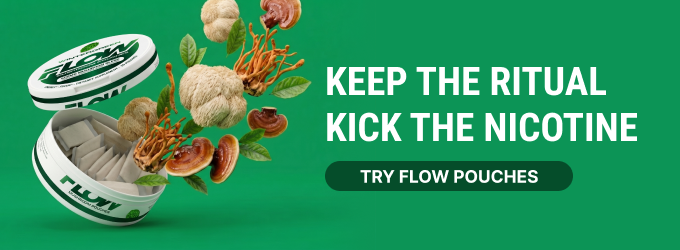
One nicotine-free pouch brand has quietly started getting attention from people trying to quit without giving up the familiar pouch ritual: Flow Pouches.
Instead of nicotine and caffeine, each pouch contains Lion's Mane for focus, Cordyceps for clean energy, Reishi for calm support, TeaCrine® for sustained performance, and methylcobalamin Vitamin B12.
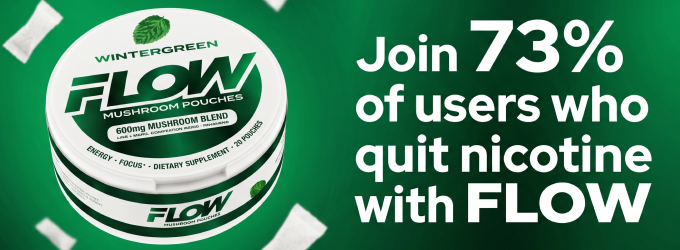
In a recent post-purchase customer survey, 73% of respondents reported quitting or greatly reducing their nicotine intake while using Flow.
The appeal is simple. Instead of giving up the pouch altogether, users simply replace what's inside it. No nicotine. No caffeine. No synthetic ingredients.
Just a different, cleaner approach to breaking the habit.
Maybe quitting nicotine isn't about having more willpower after all. Maybe it's about replacing the habit with something better.
⏩ See Why 103,000+ People Have Switched to Flow


Comments (19)
Sort by: Newest